
- Tags: Office Market News,
- Author: Admin STS,
- Date posted: 07/07/2025
LOTUS Green Building Standard
LOTUS is a green building certification with comprehensive assessment standards developed in the Vietnamese construction market by VGBC - Vietnam Green Building Council (a member of World GBC). The requirements in LOTUS standards have been adjusted to suit the practice of the construction industry, the climate conditions and regulations of the Vietnamese State.
See The Space is an office leasing agent for buildings with Green certifications such as EDGE, LEED, LOTUS, and BCA Mark, in Ho Chi Minh City and Hanoi. Let's learn about Green certifications and LOTUS-certified office buildings in Vietnam.
In the context of increasingly severe climate change, sustainable construction has become an inevitable trend globally. Not standing outside that trend, Vietnam has also made many remarkable efforts to contribute to promoting the development of green buildings. Including the development of the LOTUS standard - the first green building assessment and certification system specifically applied to the Vietnamese market.
What is the LOTUS standard?
LOTUS Building serves as a guiding standard and sets goals to promote the construction of sustainable green buildings that are friendly to the environment and human health with lower operating costs. Compared to other green building certification systems in the world such as: LEED, EDGE, BCA Green Mark, ... LOTUS also has some similarities in the scoring system, prerequisites and specific assessment requirements. The difference is that this standard has been adjusted to suit the construction environment and climate conditions in Vietnam.
Since its launch in 2010, the LOTUS certification system has been revised and updated many times. Currently, the latest version is LOTUS NC V3 released in April 2019.
1. Purpose of applying LOTUS certification
LOTUS Green Certification can be applied for many different purposes, specifically as follows:
Support planning, setting goals and implementation directions for long-term sustainable project development.
Guide the process of building a project from design, construction to operation through environmentally friendly solutions and ensuring socio-economic benefits.
Basis for measuring and evaluating the sustainability of a construction project in terms of environment, health, resource efficiency, etc.
Used as an independent certification, providing transparent information about green buildings.
The real purpose of applying LOTUS standards is not just to achieve technical standards in construction. In addition, this standard also promotes changes in thinking and action, towards a green and sustainable future for the community.
2. Which projects does the LOTUS Building standard apply to?
LOTUS standards can be applied to most types of construction projects through a system of 6 assessment tools as follows:
LOTUS NC V3: Applicable to new construction or renovation projects on a large scale (total floor area - GFA from 2,500m2 or more).
LOTUS BIO: Applicable to projects in operation.
LOTUS Homes: Applicable to individual housing projects.
LOTUS Small Buildings: Applicable to non-residential projects with a total floor area (GFA) of less than 2,500m2.
LOTUS Interiors: Applicable to projects with completed interiors.
LOTUS Small Interiors: Applicable to completed interior buildings with a total floor area of less than 1,000 m2.
3. LOTUS Green Building Criteria System
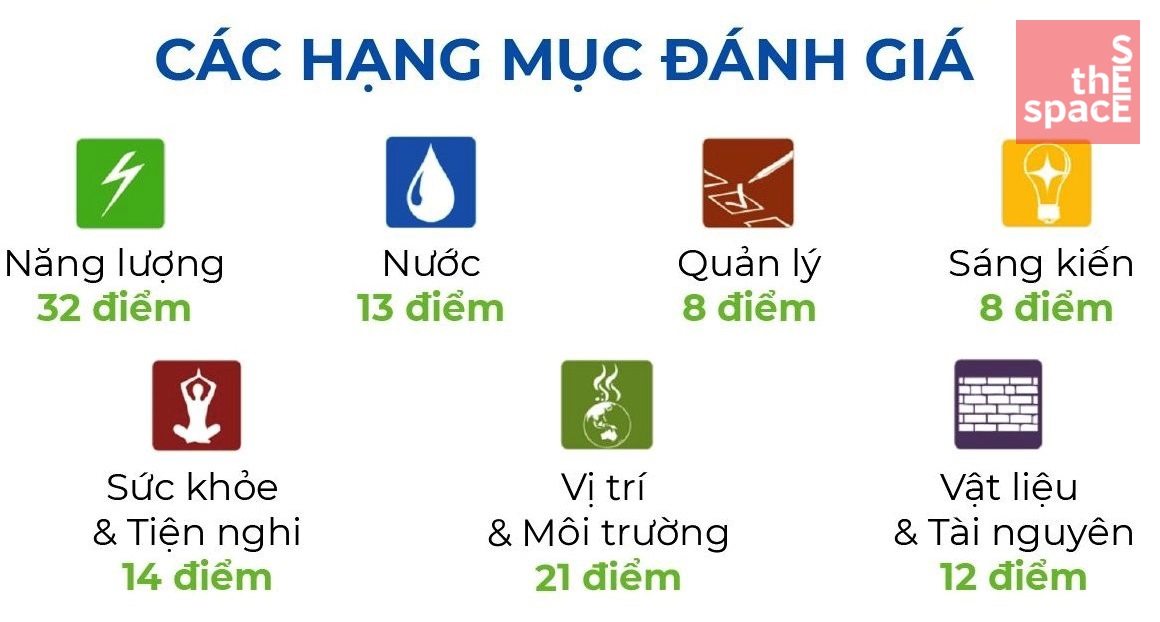
According to the latest updated version LOTUS NC v3, LOTUS provides a framework for the design, construction and operation of buildings based on 7 main criteria. These are divided into 2 groups: Mandatory criteria (including: energy, water, materials & resources, health & comfort, location & ecology, management) and Voluntary criteria (Outstanding performance).
### Energy
Energy is one of the prerequisites that projects need to meet to be certified as LOTUS green buildings. This criterion sets out the requirements for minimum energy efficiency of buildings, encouraging the use of measures to minimize the overall energy consumption of the project. In addition, it also refers to the use of natural and renewable energy sources. By meeting the specific requirements of this assessment criterion, the project can achieve a maximum of 32 points.
### Water
The excessive exploitation of water resources for construction and buildings is one of the causes of serious groundwater depletion. The consequence is the reduction of water quality and the depletion of clean water resources in large cities.
With this assessment criterion, the goal that LOTUS aims for is to reduce water consumption through the application of measures such as: using water-saving equipment, reusing rainwater, designing landscapes and efficient irrigation, etc.
### Materials and resources
The materials and resources criterion focuses on reducing the amount of waste that buildings can generate throughout the construction and operation cycle. Specifically, it encourages the selection of sustainable materials that can be quickly recycled or reused. In addition, green buildings are also encouraged to minimize the use of concrete, minimizing the need for landfill or disposal.
### Health and Comfort
This criterion focuses on improving the overall environmental quality inside buildings, ensuring health and comfort for users. Accordingly, it evaluates construction projects through technical requirements such as: air quality, thermal and acoustic systems, ventilation systems, etc. In addition, LOTUS also encourages the application of natural lighting solutions. Not only does it help bring airy living and working spaces, but it also has many positive impacts on human health and work performance.
### Location and ecology
This is one of the assessment criteria of the LOTUS certificate, referring to the selection and management of construction sites. Specifically, this criterion encourages landscape design solutions suitable for regional conditions and climate change. In addition, it also highly values projects that apply sustainable transportation, limit the heat island effect and pollution from construction activities. The goal is to minimize the negative impacts of the project on the surrounding environment and ecosystem.
### Management
In this assessment category, the LOTUS standard encourages projects to implement integrated design solutions, apply BIM in building operations as well as many other smart management solutions. The goal is to create green buildings with high operational performance and cost savings.
### Superior performance
Unlike the mandatory criteria mentioned above, superior performance is a voluntary criterion of the LOTUS certificate. It gives projects the opportunity to earn additional bonus points (up to 8 points) in 2 ways:
Method 1: Demonstrate the use of advanced solutions that can improve the performance of the building beyond the requirements of the LOTUS standard.
Method 2: Apply new ideas, initiatives and technologies that are beyond the scope of the LOTUS standard.
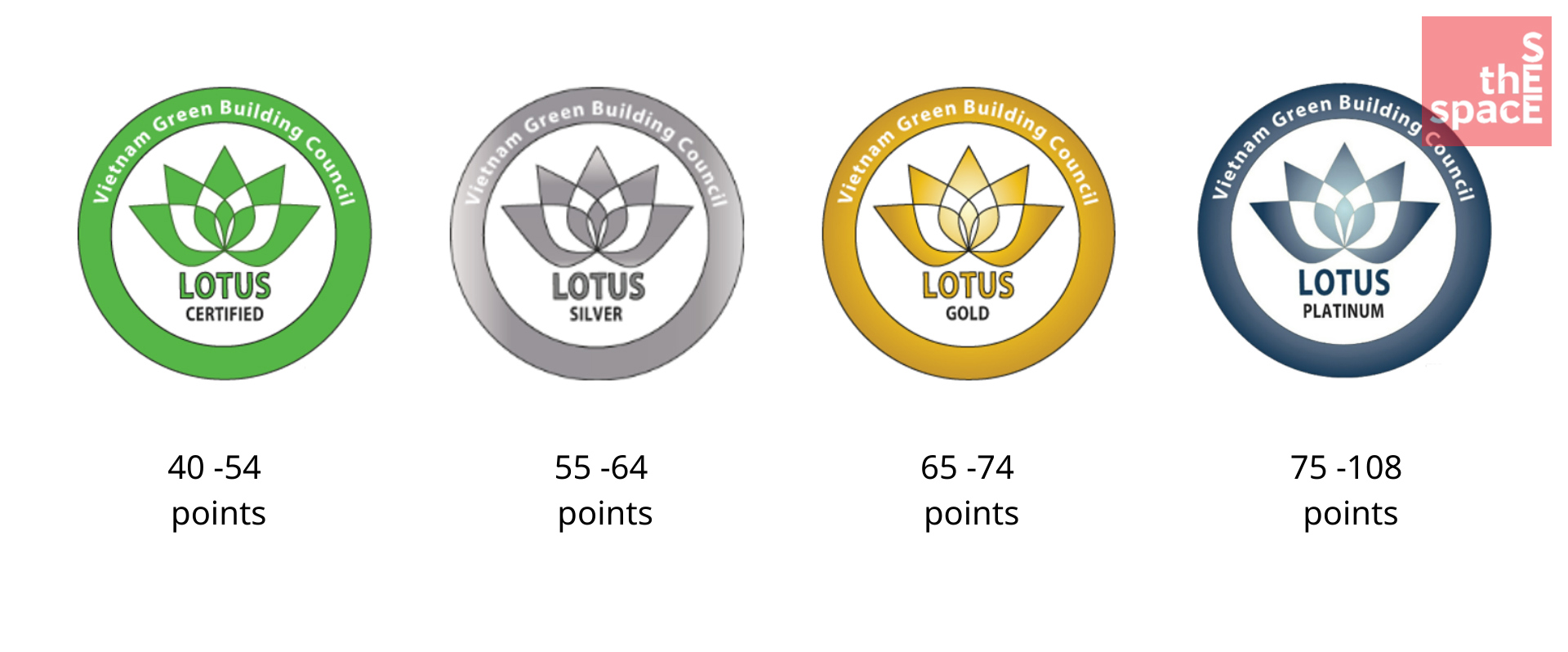
LOTUS Building certification is divided into 4 levels of assessment based on the number of points achieved by the projects. Through the certification level achieved by the project, the level of compliance with the criteria as well as the effectiveness of the green building can be assessed. Specifically as follows:
LOTUS Certified: The project achieves 40% of the set standards.
LOTUS Silver: The project achieves 55% of the set targets.
LOTUS Gold: The project is assessed to meet 65% of the standards.
LOTUS Platinum: The project meets 75% of the requirements of the LOTUS standards.
5. LOTUS Green Certification Registration Process
To be granted a LOTUS Green Certification, project investors must follow the specific registration process as follows:
Step 1: Choose a suitable rating system for the project
As mentioned above, the LOTUS rating system currently has 6 main tools applied to different types of projects (new construction or operating projects, large or small scale, etc.). Therefore, investors need to base on the type and scale of the project to choose the appropriate rating system. In addition, it is also necessary to carefully study the rating criteria and scores for each category in the selected LOTUS System.
Step 2: Register the project with VGBC
The representative of each project must submit a Project Registration Form to notify VGBC of their intention to implement the project according to LOTUS standards. Next, proceed to sign the LOTUS Project Assessment Agreement and pay the registration fee and project assessment fee to VGBC.
Step 3: Design and submit the design dossier
At this step, the investor should hire a team of consultants with capacity and experience in green building design to coordinate with the architect in analyzing and selecting the optimal design option. The design dossier must include full information on architectural design, engineering, construction and green technology solutions applied to the project.
Step 4: Evaluate the design dossier
After completing the design stage, the project representative proceeds to submit the design dossier to VGBC for evaluation. Within 8 weeks of receiving a complete application, VGBC will complete the assessment and return a LOTUS Assessment Report. If the project achieves sufficient points, VGBC will issue a provisional LOTUS certificate (expiring 18 months after the project is completed).
Contact See The Space now for more details about the Lotus Green standard!
- 📞 **Hotline: 0768 999 647
- Email: leasing@seethespace.vn
- 🌐 **Website: seethespace.vn