SOUTHERN INDUSTRIAL PARK
Right facility. Right zone.
Industrial parks in Southern VietNam 2026
We apply the model from July 2025, enabling businesses to identify industrial parks more efficiently.

Frequently Asked Questions (FAQs)
Southern Vietnam, particularly the Southern Key Economic Zone encompassing Ho Chi Minh City, Binh Duong, Dong Nai, Long An, and Ba Ria-Vung Tau, is the most developed and interconnected industrial region in Vietnam. It offers unmatched advantages including the largest concentration of industrial zones with the most complete infrastructure, the deepest and most extensive logistics network (including Cai Mep-Thi Vai deep-water port), proximity to Vietnam's largest consumer market, a highly skilled and abundant workforce, and the most comprehensive ecosystem of suppliers and service providers. These factors make it the natural choice for manufacturers targeting both export markets and domestic consumption.
Southern Vietnam's industrial zones host an exceptionally diverse range of industries. Traditional sectors include garments and textiles, footwear and leather goods, food and beverage processing, furniture and wood products, and rubber manufacturing. Higher-value industries include electronics and components, precision engineering, automotive parts, chemicals and plastics, and pharmaceuticals. More recently, the South has been attracting high-tech investments in semiconductor manufacturing, medical devices, and advanced logistics. This industrial diversity creates a robust supplier ecosystem that benefits all manufacturers operating in the region.
The Cai Mep-Thi Vai deep-water port complex in Ba Ria-Vung Tau province is one of Southeast Asia's most significant maritime infrastructure assets and provides major logistical advantages for industrial zone tenants throughout Southern Vietnam. The port can accommodate the world's largest container vessels, allowing direct shipping to major international markets such as the United States, Europe, and Northeast Asia without transshipment. This dramatically reduces both shipping costs and delivery lead times compared to ports that require intermediate stops. For export-oriented manufacturers, proximity to Cai Mep-Thi Vai translates directly into competitive advantage and cost savings.
Land availability in the core Southern industrial zones of Binh Duong, Dong Nai, and Ho Chi Minh City is becoming increasingly limited, with occupancy rates exceeding 90% in many established zones. This scarcity has driven land rental prices higher, with rates in prime locations ranging from USD 120 to over USD 220 per square meter for the full lease term. As a result, investors are increasingly looking to emerging zones in Long An, Tay Ninh, Tien Giang, and the Mekong Delta provinces, where land remains more affordable at USD 60–120 per square meter while still offering reasonable infrastructure and workforce access.
Long Thanh International Airport, currently under construction in Dong Nai province, is one of Vietnam's most significant infrastructure projects and is expected to transform industrial investment dynamics in Southern Vietnam upon its opening. Designed to eventually handle over 100 million passengers and 5 million tons of cargo annually across multiple phases, the airport will massively expand air freight capacity for the region. This is particularly beneficial for manufacturers of high-value goods such as electronics, pharmaceuticals, and perishables that require fast, reliable air cargo connections. The airport's presence is already influencing industrial zone development in Dong Nai and surrounding areas, and early investors in these zones stand to benefit significantly from the improved logistics environment.
SEE THE SPACE provides free consultation, helping businesses identify industrial parks that align with operational needs, location strategy, budget control, and long-term growth.
With SEE THE SPACE, Right Space. Right Budget. helps tenants choose the right space, optimize total occupancy costs, and secure favorable lease terms through free, needs-based consultancy aligned with real operational and growth plans.
Southern Vietnam, particularly the Southern Key Economic Zone encompassing Ho Chi Minh City, Binh Duong, Dong Nai, Long An, and Ba Ria-Vung Tau, has long been known as the "economic engine" of the country. This region accounts for a large proportion of the national GDP and is the most densely concentrated area of industrial parks, export processing zones, and high-tech zones in Vietnam.
Binh Duong province alone has over 29 industrial parks with an occupancy rate exceeding 90%, attracting hundreds of thousands of workers and billions of USD in FDI. Dong Nai, with over 30 industrial parks, is equally impressive, housing large corporations such as Changshin, Pouchen, Taekwang, and many multinational corporations. Ho Chi Minh City, the country's largest economic and financial center, serves as the coordination, service, and trade hub for the entire Southern industrial ecosystem.
The logistics system in Southern Vietnam is considered the most developed and integrated in the country. The Cai Mep – Thi Vai port in Ba Ria – Vung Tau is the largest deep-water port in Southeast Asia, capable of receiving super-large container ships with a tonnage of hundreds of thousands of tons. Tan Son Nhat International Airport in Ho Chi Minh City and the Long Thanh airport under construction will enhance air transport capacity, serving the export of high-value goods.
The South is also the most diverse region in terms of industrial sectors, from textiles, footwear, and food processing to electronics, precision mechanics, chemicals, and high technology. This diversity creates a rich industrial ecosystem where businesses from many fields can find a suitable environment and a complete supply chain.
However, industrial parks in the South are also facing challenges regarding increasingly limited land availability and rising land rental prices. This has spurred the trend of industrial park development to neighboring provinces such as Long An, Tay Ninh, and Tien Giang, extending into the Mekong Delta region, opening up new opportunities for investors seeking more reasonable costs while still accessing the rich market and infrastructure of the Southern key economic region.
SEE THE SPACE provides industrial site selection advisory and leasing support across Southern Vietnam — completely free of charge for tenants.
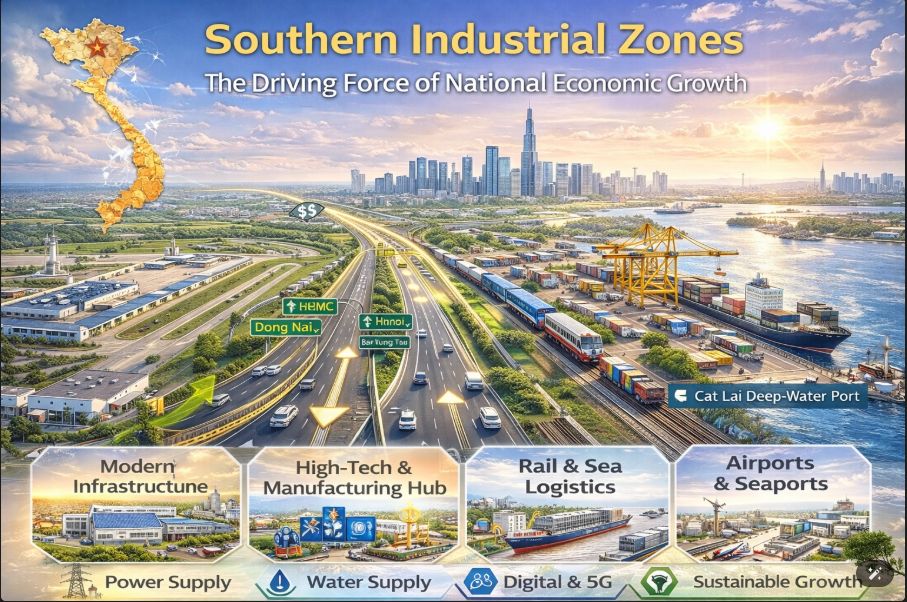
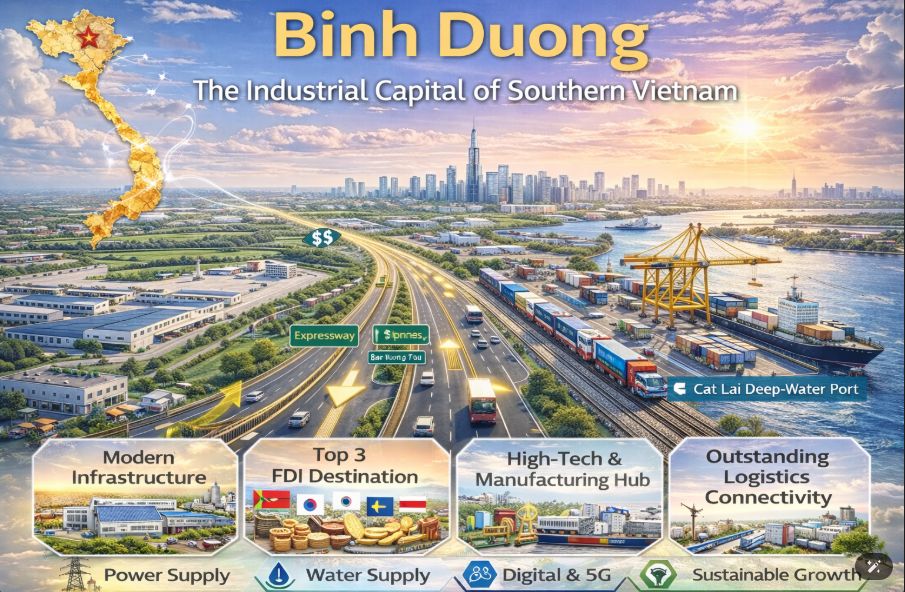
Binh Duong province has the highest density of industrial parks in Vietnam and is one of the leading industrial investment destinations in Southeast Asia. From a poor agricultural province, after more than 25 years of reform and opening up, Binh Duong has risen to become a developed industrial province with one of the highest per capita incomes in the country.
Binh Duong currently boasts more than 29 industrial parks with a total area of thousands of hectares, attracting over 4,000 FDI enterprises from more than 65 countries and territories. Large and well-known industrial parks in Binh Duong such as VSIP I, VSIP II, Song Than, Dong An, and My Phuoc have become model industrial parks not only domestically but also for countries in the region to learn from. The average occupancy rate in Binh Duong's industrial parks consistently remains above 90%.
The factor creating Binh Duong's special attractiveness is its consistent and transparent investment attraction policy over many decades. The province consistently ranks among the top in the national PCI (Provincial Competitiveness Index), reflecting a friendly business environment, streamlined administrative procedures, and a highly dedicated workforce. The stability and consistency of investment policies are particularly appreciated by foreign investors.
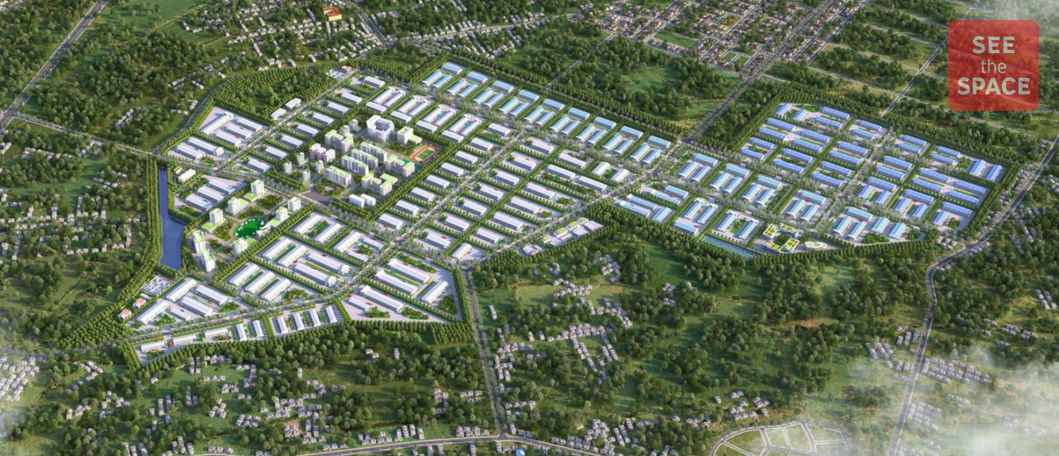
Binh Duong is also a pioneer in developing integrated industrial cities with the Becamex Smart City model. This model integrates industrial parks with urban areas, commerce, education, and healthcare, creating a complete living and working environment for hundreds of thousands of workers and professionals. This represents a new generation of industrial park development, aiming to improve the quality of life for workers alongside economic growth.
Looking to the future, Binh Duong is shifting its industrial structure towards reducing the proportion of labor-intensive industries and increasing the attraction of high-tech industries, R&D, logistics, and industrial services. This strategy aims to increase added value and maintain a competitive advantage in the context of rising labor costs and increasing competitive pressure from other localities.
SEE THE SPACE provides industrial site selection advisory and leasing support across Southern Vietnam — completely free of charge for tenants.
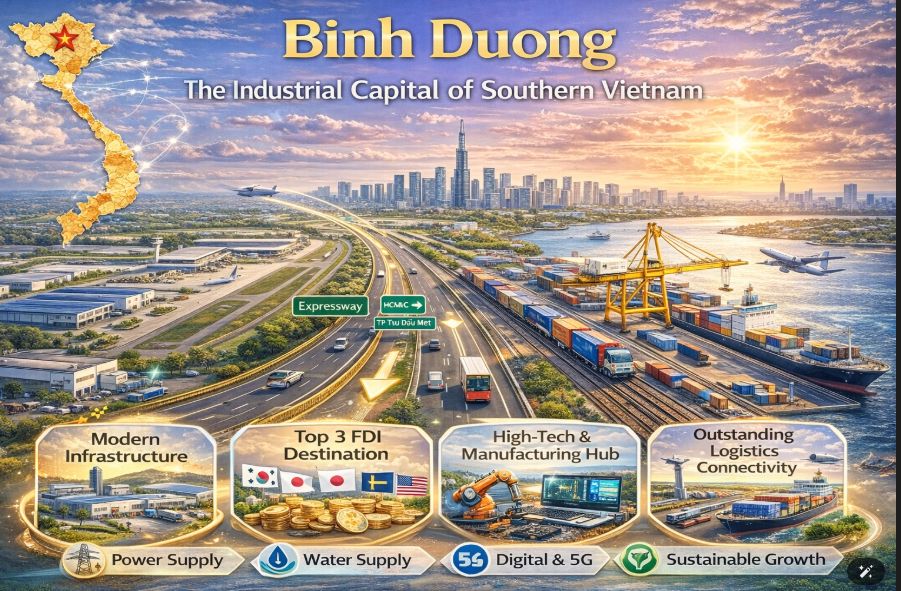
Dong Nai is strategically located in the Southern key economic region, bordering Ho Chi Minh City, Binh Duong, and Ba Ria – Vung Tau, playing a crucial role as an industrial gateway connecting the domestic market with international supply chains and trade. With over 30 industrial parks in operation and under development, Dong Nai has the highest number of industrial parks in the country.
Long Thanh International Airport – a key national infrastructure project currently under construction in Dong Nai – will be a game-changer upon completion. With a design capacity of up to 25 million passengers per year in the first phase and a large cargo capacity, Long Thanh Airport will transform Dong Nai into a regional aviation hub, opening up opportunities for exporting high-value goods by air for the entire Southern economic region.
Dong Nai has a diverse industrial structure with the presence of many industries: footwear and leather, textiles, wood processing, electronics and components, chemicals, mechanical engineering, and food and beverage production. This diversity creates a rich industrial ecosystem with a deeply developed supply chain. Many large multinational corporations such as Chang Shin, Pouchen, Taekwang, Amata, and Nidec have large-scale production facilities here.
Dong Nai's transportation system is receiving significant investment to meet development needs. The Ho Chi Minh City – Long Thanh – Dau Giay Expressway, National Highway 51 connecting to Cai Mep – Thi Vai Port, and ring roads are being completed, shortening travel time between industrial parks and seaports. The North-South high-speed railway, once completed, will also enhance the capacity for transporting goods and passengers in the region.
With a solid industrial foundation, comprehensively upgraded transportation infrastructure, and the advantages of Long Thanh Airport, Dong Nai is becoming an increasingly attractive destination for the new generation of FDI investment. This is a good opportunity for strategic investors to find a location in a rapidly growing industrial zone that still has available land and opportunities.
SEE THE SPACE provides industrial site selection advisory and leasing support across Southern Vietnam — completely free of charge for tenants.
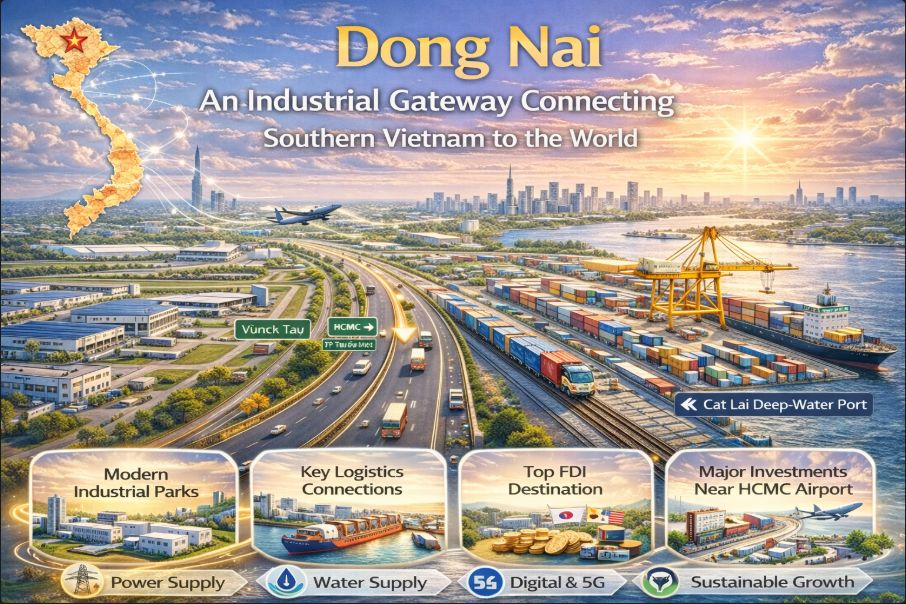
Industrial parks in Southern Vietnam are undergoing a profound transformation, shifting from traditional models focused on labor-intensive manufacturing to a new generation of high-tech, multi-functional, and sustainable industrial parks. This is an inevitable trend in the context of a rapidly changing global economy and increasingly demanding investor requirements.
The new generation of industrial parks in the South is not just a place for pure production but also integrates research and development (R&D), human resource training, business support services, smart logistics, and even residential and commercial areas to serve workers. The integrated industrial-urban-service park model (like that of VSIP Group or Becamex) is being replicated and developed in an increasingly sophisticated direction.
Technology is being deeply integrated into the management and operation of industrial parks. Smart industrial park management platforms utilizing IoT, Big Data, and AI are being deployed to optimize energy use, manage security, monitor the environment, and provide utility services for tenant businesses. This not only enhances operational efficiency but also creates a better experience for the business community within the industrial park.
Circular economy and sustainable development are becoming core criteria in the design and operation of new industrial parks. Eco-industrial parks, where businesses share infrastructure, reuse each other's waste and energy in a closed-loop system, are being piloted and replicated in the South. The use of renewable energy, water optimization, and smart waste management are increasingly common mandatory criteria in new industrial parks.
Geographical shifts are also a noteworthy trend. Due to dwindling land resources and rising rental prices in Ho Chi Minh City, Binh Duong, and Dong Nai, industrial parks are expanding to Long An, Tay Ninh, Tien Giang, and further afield to the Mekong Delta provinces. This area has an abundant labor force, low land costs, and increasingly完善 transportation infrastructure, promising to become a new industrial hub of the South in the next decade.
SEE THE SPACE provides industrial site selection advisory and leasing support across Southern Vietnam — completely free of charge for tenants.
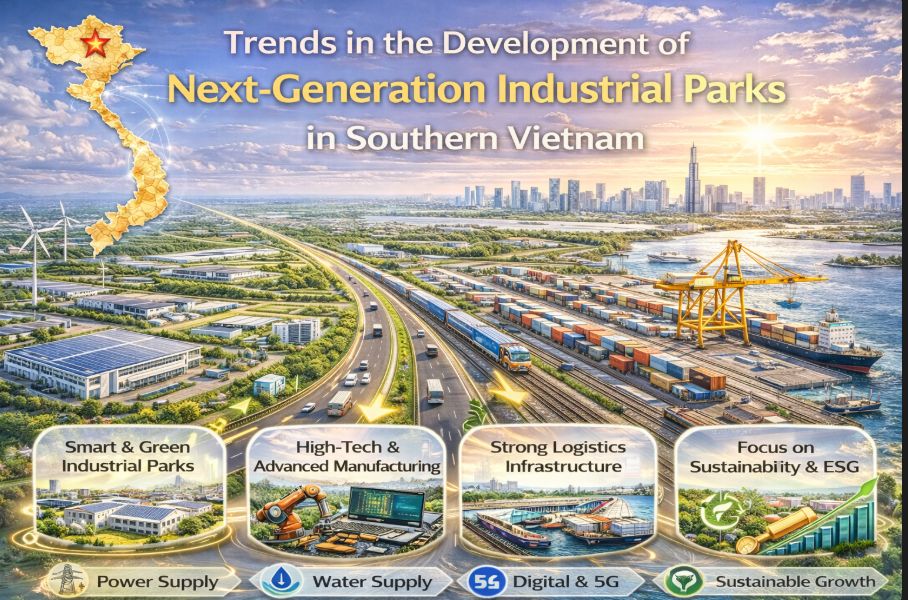
Southern Vietnam remains a top destination for foreign investment in the industrial sector, despite facing challenges related to land availability and rising costs. For international investors, the right location and timing can create a sustainable competitive advantage in this rapidly developing market.
The labor market in the South remains one of its biggest competitive advantages. Although labor costs have increased compared to 10-15 years ago, wages in Vietnam are still significantly lower than in China, Thailand, or Malaysia. Furthermore, the Southern workforce is increasingly well-trained, with numerous universities, technical colleges, and vocational training centers providing the workforce needed for modern manufacturing industries.
The size of the Southern domestic market is also a particularly attractive factor. Ho Chi Minh City and its surrounding provinces have a combined population of tens of millions with a steadily increasing standard of living, creating a strong domestic consumer market. Manufacturing businesses in Southern Vietnam can simultaneously serve the export market and tap into the potential domestic market – an advantage few other investment locations in the region possess.
Regarding industrial park selection strategies, investors should consider several key factors: distance to seaports and airports, access to human resources, the reputation and capabilities of the industrial park developer, the quality of infrastructure and amenities within the park, as well as specific incentives offered by the locality. Current trends show that industrial parks in Long An and Tay Ninh are attractive options for businesses seeking a balance between cost and market access.
For investors with a long-term vision, this is an opportune time to strategically position themselves in Southern Vietnam before land prices and input costs continue to rise in line with economic development. Vietnam is increasingly integrating into the global economy, and the South, as the country's economic hub, will continue to be an unmissable strategic destination.
SEE THE SPACE provides industrial site selection advisory and leasing support across Southern Vietnam — completely free of charge for tenants.