News
- Tags: Industrial Park Market News,
- Author: Admin STS,
- Date posted: 19/09/2026
FDI Boom 2026: Opportunities for Vietnam Industrial Real Estate
FDI Boom 2026: What Opportunities for Vietnam's Industrial Real Estate?
Suggested meta description: Vietnam's FDI hit record highs in 2026, fueling a breakout year for industrial real estate. Opportunities, challenges and the 2027-2029 outlook.
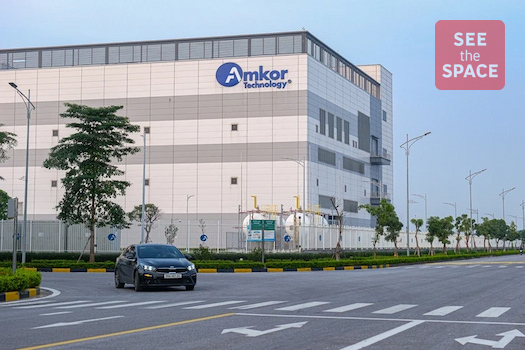
Foreign direct investment (FDI) is delivering one of the strongest boosts Vietnam's industrial real estate market has seen in years. With a string of record-breaking figures released throughout 2026, the question is no longer "will industrial real estate grow" but "who will capture this opportunity, and how."
The 2026 FDI picture: record numbers
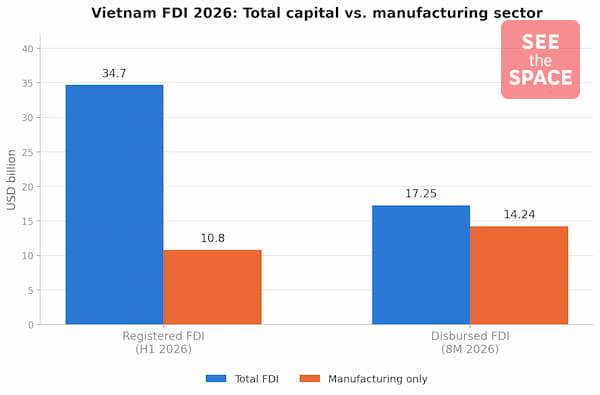
The data released this year points to unmistakable momentum. In the first six months of 2026, total registered FDI into Vietnam reached USD 34.7 billion, up roughly 61% year-on-year. Manufacturing and processing — the main driver behind industrial real estate demand — accounted for 62% of newly registered FDI, equivalent to USD 10.8 billion.
The momentum held through the second half of the year. By the end of August 2026, disbursed FDI was estimated at USD 17.25 billion, up 12% year-on-year and the highest 8-month figure in five years, with manufacturing and processing continuing to lead at USD 14.24 billion, or 82.6% of total disbursed capital.
Notably, the concentration by region and sector is striking. Northern Vietnam is now the most attractive destination, drawing about USD 8.63 billion in manufacturing FDI — 80.5% of the national total — with computers, electronics and optical products making up nearly 66% of that figure, a clear sign that Vietnam is moving up the value chain into higher-tech, higher-value industries.
Why is FDI flowing so heavily into industrial real estate?
Three forces are reinforcing one another:
First, the continued shift of manufacturing away from China (the "China+1" strategy) keeps gaining pace among multinationals, and Vietnam's growing participation in global trade through FTAs — alongside this reshoring strategy pursued by major manufacturers — continues to drive the industrial real estate market.
Second, high-tech corporations are scaling up local production. The expansion of these high-tech groups is pushing demand for industrial land, factories and warehouses sharply higher, with spillover effects into many related real estate segments.
Third, the ripple effect extends well beyond the industrial segment itself. According to Savills Vietnam, new investment inflows drive demand for jobs, offices, housing, retail, hotels and serviced apartments, creating a spillover effect across multiple real estate segments. This is the key insight: FDI enterprises don't just need land and factories — they also need executive offices, space for R&D teams, logistics and supporting services.
Supply and rents: rising, not cooling
Even as new supply keeps coming online, rents continue to trend upward. By the end of 2026, the market is expected to welcome substantial new supply — around 1,900 hectares of industrial land, nearly 700,000 sqm of ready-built warehouses and 1 million sqm of ready-built factories in key markets across the north and south. Even so, rents are forecast to maintain steady growth thanks to sustained demand, particularly for industrial land, ready-built factories and modern logistics assets.
A clear geographic expansion is also under way: investors and manufacturers are increasingly looking to provinces further afield in Central Vietnam and the Mekong Delta, drawn by competitive land prices and steadily improving infrastructure. This signals that the industrial real estate "playing field" is expanding beyond the traditional hubs of Bac Ninh, Hai Phong, Binh Duong and Dong Nai.
2027-2029 outlook: a breakout period
Securities firms and international advisors alike take a positive medium-term view. According to VCBS, the 2027-2029 period should see even stronger FDI attraction and industrial real estate performance, with land-leasing revenue growth expected at 14-16% per year over 2026-2027, driven by three factors: rising supply, a favorable investment environment, and continued commitment from tech "eagles" like Samsung, LG and Foxconn.
On the long-term supply side, Cushman & Wakefield forecasts about 6,200 hectares of industrial park land entering the market by 2027. JLL likewise expects the market to remain positive over the next 12-24 months, supported by high-quality FDI, regional manufacturing shifts, and key infrastructure projects underway nationwide.
Challenges that can't be ignored
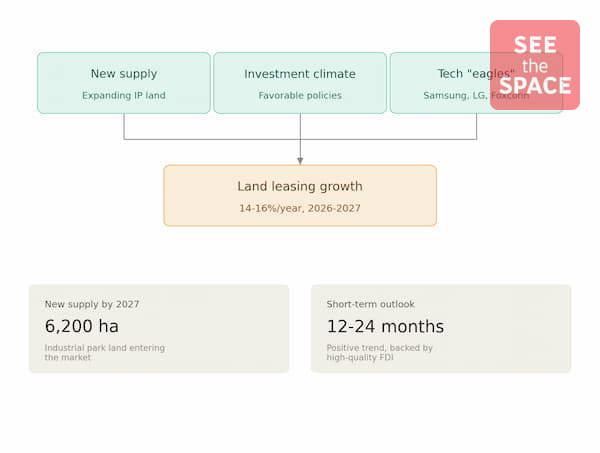
The picture isn't entirely rosy. Experts point to two major risks:
- Planning and legal bottlenecks: overlapping zoning affects a significant share of provincial-level industrial parks, requiring tighter inter-agency coordination.
- Regional competition: other emerging Southeast Asian markets with abundant supply and lower costs are giving international tenants more alternatives, especially in lower-value industries like textiles and furniture.
On top of that, the "greening" of industrial parks — pursuing LEED certification and renewable energy — is becoming a mandatory requirement for many international investors, forcing domestic industrial infrastructure developers to upgrade standards or risk being left out of the game.
What opportunities exist for businesses and investors?
From a real estate leasing consultancy's perspective, three clear opportunities are emerging:
- Office demand tied to the FDI manufacturing wave — FDI companies opening factories typically also need executive offices, representative branches or R&D centers in major cities like Ho Chi Minh City and Hanoi. This is a direct opportunity for the office leasing segment.
- Supply-chain expansion demand — as major players expand, a wave of satellite businesses (suppliers, logistics providers, legal and accounting firms) also need new workspace, creating spillover demand for commercial and office space.
- Geographic relocation — with the expansion trend into Central Vietnam and the Mekong Delta, businesses need advisors with strong local market knowledge to find the right space outside the traditional hubs.
Conclusion
The 2026 FDI wave isn't just an industrial real estate story — it's reshaping demand across Vietnam's entire commercial real estate market, from factories and warehouses to offices and business support services. With growth expected to hold through 2029, now is the time for businesses to proactively secure the right space before prices climb further.
Contact SEE the SPACE today!
📞 Phone: 0768 999 647
📩 Email: leasing@seethespace.vn
🌐 Website: seethespace.vn
SEE the SPACE - Your Space, Expertly Guided
SEE the SPACE is a professional real estate leasing consultancy dedicated to helping clients discover and secure the office and commercial spaces that best fit your needs.