
- Tags: TIPs when leasing an office,
- Author: Admin STS,
- Date posted: 11/10/2026
Negotiating an Office Lease in a High-Rent Market: 7 Things You Need to Know
Office rents in HCMC remain high Negotiating an Office Lease in a High-Rent Market: 7 Things You Need to Knowin 2026. 7 things businesses must know to negotiate a lease: true costs, rent-free periods, escalation, renewal, deposits.
Negotiating an Office Lease in a High-Rent Market: 7 Things You Need to Know
Office rents in Ho Chi Minh City are sitting at their highest levels in years, with no sign of cooling. For businesses preparing to lease, relocate or renew, the question is no longer "can we get a discount?" but "how do we get the most value from every dollar we spend?" The good news: even when asking rents are hard to move, many other lease terms can still be negotiated to lower total cost and reduce risk.
At SEE the SPACE, we support businesses from defining requirements and touring buildings to negotiating and reviewing the lease. Below are the 7 most important things to know before you sit down at the negotiating table.
Market Snapshot: Why Are Rents Staying High?
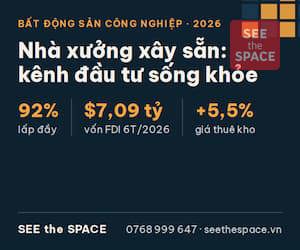
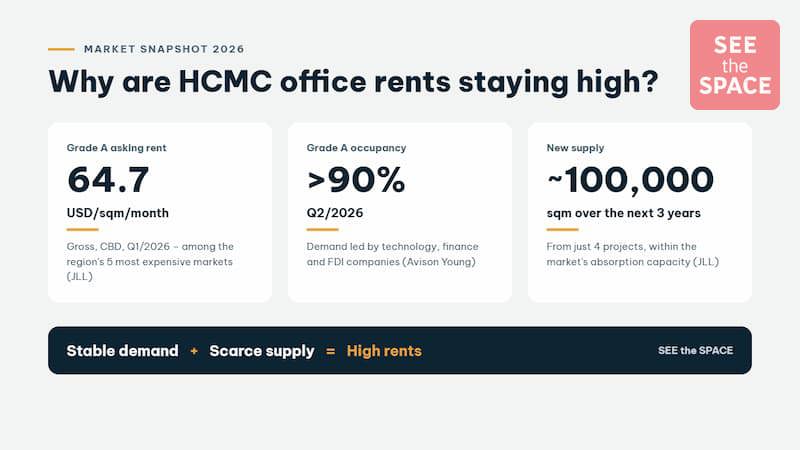
As of the end of Q1/2026, the average gross asking rent for Grade A offices in HCMC's CBD reached around USD 64.7/sqm/month, placing the city among the 5 most expensive markets in the region. Avison Young reported Grade A occupancy above 90% in Q2/2026, with demand led mainly by technology, finance and FDI companies.
Meanwhile, new supply is very limited: only around 100,000 sqm from 4 projects is expected over the next 3 years. Stable demand plus scarce supply is why rents remain high and landlords have little incentive to cut asking rents.
Note: research firms publish different figures depending on methodology (gross vs. net rent, survey scope). What matters is the overall trend: rents are high and stable.
1. Know the "Real Price" – Look Beyond the Asking Rent
An attractive rate on a quotation is not necessarily the cheapest option. When comparing buildings, convert everything into total monthly occupancy cost, including:
- Rent and service charge: Some buildings quote these together, others separately.
- VAT: Confirm whether prices include or exclude VAT.
- Overtime air-conditioning and electricity: Especially important for teams working evenings, weekends or in shifts.
- Car and motorbike parking fees: Can add up significantly for larger teams.
- How area is measured: Net lettable area (NLA) and actual usable area can differ. Ask about the efficiency ratio and whether the space will be re-measured at handover.
👉 Tip: Compare costs per employee per month rather than per sqm. A pricier building with a regular, column-free floor plate may fit more workstations and turn out cheaper per head.
2. Timing and Leverage Determine the Outcome
In a landlord's market, time is your leverage:
- Start 9–12 months before your current lease expires (12–18 months for large spaces). Rushed negotiations always favor the landlord.
- Always keep a genuine alternative. Tour at least 3 buildings in parallel, including the option to renew in place. Your current landlord is usually more flexible when they know you have other choices.
- Widen your search: Good-quality Grade B buildings (see our Grade A, B, C office leasing advice in HCMC), and areas such as District 3, Thu Thiem, Phu My Hung or near metro stations, often offer more competitive rents than the District 1 core.
- Highlight your value to the building: A long lease term, large area, reputable brand and solid payment history are all leverage you can trade for incentives.
3. Negotiate "Beyond Price": Rent-Free Periods and Fit-Out Support
When landlords won't lower asking rents (because it affects the asset's valuation), they are often willing to concede elsewhere. This is where businesses save the most:
- Rent-free fit-out period: Typically 1–3 months depending on area and lease term. Ask for the service charge to be waived during this period too, not just the rent.
- Additional rent-free months: Often achievable on longer leases.
- Fit-out contribution: Some landlords contribute an amount per sqm or hand over the space with ceilings, flooring and lighting installed.
- Taking over existing fit-out: If the previous tenant's fit-out remains, you can save considerably on upfront investment.
- Parking, signage and shared meeting room incentives.
To estimate your fit-out budget before negotiating, see Office Interiors 2026: Design Trends & Fit-Out Cost Reference.
4. Control Rent Escalation Over the Lease Term
Today's rent is only the starting point. The escalation clause determines the total cost of the whole lease:
- Fixed, capped increases: Agree on a specific increase (for example, a fixed percentage every year or every 2 years) rather than "adjusted to market rate".
- Separate rent from service charge: Service charges can also rise. Require a transparent, capped mechanism for service charge increases.
- Renewal rent: Negotiate a cap on renewal increases from the outset so you aren't caught on the back foot at expiry.
- Currency and exchange rate: If rent is quoted in USD but paid in VND, agree clearly on the exchange rate applied (which bank, what date) to avoid currency risk.
5. Build in Flexibility: Renewal, Expansion, Contraction
Businesses change faster than lease terms. These rights cost little to negotiate upfront but are very valuable later:
- Right to renew: Guarantees renewal on pre-agreed conditions.
- Right of first refusal (ROFR) on additional space: You get first priority when adjacent space becomes available.
- Right to surrender part of the space or terminate early (break clause): With clear conditions and fees.
- Right to assign or sublet: Especially important if you plan to restructure, merge or share the office with affiliated companies.
6. Deposits, Payments and Move-Out Costs
These terms are easy to overlook but directly affect cash flow:
- Security deposit: Usually equivalent to 3 months' rent and service charge. You may negotiate a lower amount, or replace it with a bank guarantee to preserve cash.
- Payment frequency: Quarterly payments are common; request monthly payments if you need cash-flow flexibility.
- Deposit refund period: Specify the number of days for refund after handing back the premises.
- Reinstatement obligations: The cost of removing your fit-out at move-out can be substantial. Negotiate a reinstatement waiver, or record a detailed handover condition report (with photos) when you take possession.
7. Legal Due Diligence and Risk Allocation
A well-drafted lease protects your business from the unexpected:
- Building legal status: Check the landlord's right to lease, building permit, fire safety acceptance and approved office use – especially important when registering the space as your company's head office address.
- Force majeure clause: Clearly define when rent may be suspended or reduced.
- Termination and compensation clauses: Balance obligations between both parties so the tenant is not the only one facing penalties.
- Change of building ownership: Ensure the lease remains valid if the building is sold.
- Operating hours, maintenance and service standards: Specify these in the lease or its appendices.
Before signing, don't miss SEE the SPACE's 5 "Golden" Notes When Signing an Office Lease and our 2026 Office Leasing Handbook.
This article is for reference only. For high-value leases, businesses should also consult a legal professional.
Frequently Asked Questions
Can office rent still be negotiated when the market is this tight? Yes. Asking rents may be hard to lower, but incentives such as rent-free periods, fit-out support, capped escalation or a reduced deposit are still commonly accepted, especially for long leases or large spaces.
How early should we start looking for a new office? At least 9–12 months before your current lease expires, and 12–18 months for large spaces or complex fit-outs.
Is it better to renew or relocate? It depends. Renewing saves relocation and fit-out costs, while relocating may secure better rent and a more suitable space. Compare the total cost over the whole lease term, not just the monthly rent.
Does using a leasing consultant cost extra? For most transactions, the brokerage fee is paid by the landlord, so tenants receive support with touring, comparison and negotiation at no additional cost. Confirm this with your consultant before you begin.
Negotiate Smarter With SEE the SPACE
In a landlord's market, a consultant who knows actual transaction rents, which buildings are offering incentives, and how to review a lease can save your business significant money and time.
SEE the SPACE supports you throughout the process:
- Requirement analysis and total occupancy cost budgeting
- Shortlisting and comparing suitable options, including renewal
- Organizing on-site building tours
- Negotiating rent and lease terms
- Support through to space handover
Browse our offices for lease in HCMC and serviced offices with current incentives.
📞 Contact us for a free consultation:
SEE the SPACE – Your Space, Expertly Guided
📞 Hotline: 0768 999 647 📧 Email: leasing@seethespace.vn 🌐 Website: seethespace.vn