
Warehouse in Dong Nai
The right facility, in the right zone.
Warehouse in Dong Nai

Frequently Asked Questions (FAQs)
Long Thanh International Airport is expected to fundamentally transform the logistics landscape for industrial investors in the region. Upon completion of Phase 1, the airport will handle up to 25 million passengers and 1.2 million tons of cargo annually, making it Vietnam's primary international aviation gateway and one of Southeast Asia's major cargo hubs. For manufacturers, this means dramatically expanded air freight capacity for time-sensitive, high-value exports such as electronics, medical devices, pharmaceuticals, and fashion goods. Industrial zones in Long Thanh and Nhon Trach districts are positioned to benefit most directly, as they sit within short trucking distance of both the new airport and Cai Mep-Thi Vai seaport. Analysts expect industrial land and factory rental prices in these areas to appreciate significantly as the airport's completion date approaches, making current investment particularly attractive.
Dong Nai has one of the most diverse industrial bases in southern Vietnam, developed over more than 30 years. Footwear and leather goods manufacturing is the largest sector, with global brands sourcing from major factories in KCN Amata, Loteco, and Nhon Trach zones. Electronics and electrical components represent a fast-growing segment anchored by Korean, Japanese, and Taiwanese manufacturers. Garment and textile production remains active, particularly in zones with good labor access. Food and beverage processing, including dairy products and packaged foods, serves both domestic and export markets. Mechanical engineering and metalworking serves the automotive supply chain and construction sector. Chemicals, rubber, and plastics round out the province's diverse industrial profile. This diversity makes Dong Nai particularly resilient to sector-specific downturns and attractive to businesses seeking a mature supplier and services ecosystem.
Binh Phuoc is gaining investor attention primarily because of its cost advantages: factory rental rates of USD 1.5–3 per m²/month are 40–50% below equivalent facilities in Binh Duong, and labor costs at Minimum Wage Zone 3 are among the lowest in southern Vietnam. The province also offers abundant industrial land availability, proximity to Binh Duong's established industrial ecosystem, and unique access to raw materials from its extensive agricultural base (cashew, rubber, timber, coffee). The Becamex Binh Phuoc industrial zone brings Binh Duong-standard infrastructure to the province. However, Binh Phuoc has real limitations that investors must weigh: road connectivity to Ho Chi Minh City and seaports remains slower than Binh Duong or Dong Nai (though the Ho Chi Minh City – Chon Thanh expressway under construction will improve this); the local labor force has less industrial experience; and the supplier ecosystem for components and industrial services is less developed. Binh Phuoc is best suited for labor-intensive manufacturing with simple supply chains rather than complex, high-precision production.
Dong Nai's industrial zones benefit from excellent multi-modal logistics connectivity. By sea, National Highway 51 and the Bien Hoa – Vung Tau expressway corridor connect Nhon Trach and Long Thanh districts to Cai Mep-Thi Vai Port in Ba Ria-Vung Tau (25–40km), which offers direct container shipping to the Americas, Europe, and Northeast Asia. Cat Lai Port in Ho Chi Minh City (40–60km away) handles large feeder vessel volumes for intra-Asian trade. By road, National Highway 1A connects northward to Central Vietnam and southward to Ho Chi Minh City. By air, Tan Son Nhat International Airport in Ho Chi Minh City (40–60km) currently handles air cargo, to be supplemented and eventually surpassed by Long Thanh International Airport under construction in the province. By rail, there are plans for freight rail connections to the national network, though this remains longer-term infrastructure.
Factory rental prices in Dong Nai vary considerably based on zone maturity, location, and infrastructure quality. Premium zones with international-standard infrastructure such as KCN Amata and Loteco in Bien Hoa City command USD 4.5–6 per m²/month for ready-built factories, reflecting their established reputation and strong demand. Mid-tier industrial zones in Trang Bom, Vinh Cuu, and Di An offer rates of USD 3.5–5 per m²/month with solid but less premium infrastructure. Newer and more remote zones in Long Thanh, Nhon Trach, and northern districts (Dinh Quan, Tan Phu) provide more competitive rates of USD 2.5–4 per m²/month, with Long Thanh and Nhon Trach commanding a slight premium due to port and airport proximity. Industrial land lease rates for businesses planning to build their own facilities range from USD 60–150 per m² for the full lease term, significantly below Binh Duong's central zones.
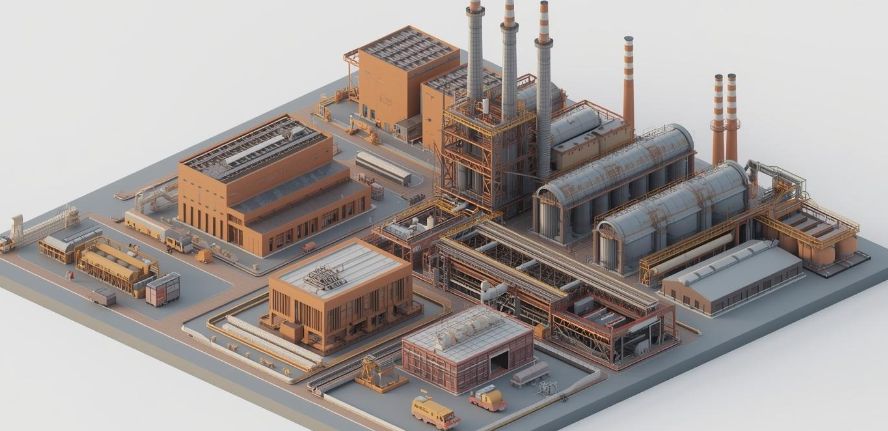
Dong Nai province boasts the highest number of industrial parks in the country, with over 32 operational and developing parks attracting investment from thousands of domestic and foreign businesses. Strategically located adjacent to Ho Chi Minh City, Binh Duong, and Ba Ria – Vung Tau, Dong Nai plays a crucial role as a gateway connecting the South with Vietnam's most important maritime and air logistics corridor.
The industrial park system in Dong Nai is diverse and widespread: Amata Industrial Park (Bien Hoa) is a renowned Thai-Vietnamese industrial park with international standard infrastructure and a multinational business community; Loteco Industrial Park (Bien Hoa) and Bien Hoa 2 Industrial Park focus on the mechanical and electronics industries; Long Thanh and Nhon Trach Industrial Parks benefit particularly from their proximity to Long Thanh Airport and Cai Mep – Thi Vai Port; Dinh Quan and Tan Phu Industrial Parks serve the agricultural and forestry processing industries in the northern part of the province.
The game-changing factor for Dong Nai is the Long Thanh International Airport, currently under construction within the province. Upon completion of Phase 1, with a capacity of 25 million passengers and 1.2 million tons of cargo per year, Long Thanh Airport will transform the area into a leading regional air logistics hub, particularly beneficial for the electronics, pharmaceutical, and high-end fashion industries exporting goods by air.
The rental price for ready-built factory space in Dong Nai ranges from 3.5–6 USD/m²/month, more competitive than Ho Chi Minh City and some industrial parks in Binh Duong, while offering superior sea-air logistics advantages. This is a particularly suitable destination for businesses exporting high-value products that require a combination of both modes of transportation.
The Long Thanh and Nhon Trach areas in Dong Nai province are becoming a hot spot for factory investment in Southern Vietnam thanks to two exceptional infrastructure advantages: their location right next to the Long Thanh International Airport construction site and their convenient connection to the Cai Mep – Thi Vai port cluster in Ba Ria – Vung Tau. This is a rare location in Southern Vietnam that can simultaneously access both a large-scale international airport and seaport in a short time.
Long Thanh Industrial Park and its surrounding satellite industrial parks are strongly attracting investment in high-value export manufacturing industries: electronics and components, medical equipment, pharmaceuticals, fashion, and high-end leather goods. These industries particularly require fast and reliable air freight – something that Long Thanh Airport will provide on a scale and quality far superior to the current Tan Son Nhat Airport.
The Nhon Trach area, with its many existing industrial parks such as Nhon Trach 1–6, offers a diverse range of factory spaces for rent, from small to large, suitable for many industries. National Highway 51 directly connects Nhon Trach with Cai Mep Port, just 25-30km away, creating an extremely convenient maritime logistics corridor. The Ben Luc – Long Thanh Expressway, once completed, will further improve connectivity between this area and Ho Chi Minh City and the western provinces.
Long-term investors are paying particular attention to this area due to the strong potential for industrial real estate price appreciation once Long Thanh Airport becomes operational. Businesses currently locating factories here will have a competitive location and rental price advantage compared to when the airport is completed and land prices skyrocket.
Binh Phuoc – a province bordering Binh Duong and Dong Nai to the north – is emerging as a new industrial investment destination with exceptionally competitive costs. With the lowest industrial land and labor costs in the Southeast region, Binh Phuoc is attracting an increasing number of businesses from Binh Duong and Ho Chi Minh City seeking cost savings while maintaining proximity to the southern economic hub.
The industrial park system in Binh Phuoc is rapidly developing: Becamex Binh Phuoc Industrial Park in Chon Thanh district is the largest project, developed by Becamex Group (a leading industrial park developer in Binh Duong), bringing world-class infrastructure standards to this new area. Minh Hung – Korea Industrial Park (Chon Thanh district) attracts investment from Korean businesses in the electronics and mechanical industries. Dong Xoai I and II Industrial Parks in Dong Xoai City serve the processing of agricultural and forestry products, wood, and food, perfectly suited to the province's agricultural and forestry characteristics.
Factory rental prices in Binh Phuoc range from 1.5–3 USD/m²/month – 40–50% lower than Binh Duong – a clear cost advantage for businesses looking to minimize fixed production costs. Labor costs at the regional minimum wage level 3 – lower than Ho Chi Minh City and Binh Duong – are also attractive to labor-intensive industries such as textiles, footwear, and wood processing.
Binh Phuoc is also a major source of cashew nuts, rubber, wood, and coffee, making it favorable for agricultural and forestry processing industries to locate factories near these sources. Infrastructure is undergoing significant upgrades, especially the Ho Chi Minh City – Chon Thanh expressway currently under construction, which will significantly shorten travel time between Binh Phuoc and Ho Chi Minh City and southern seaports.
Dong Nai is developing into a unique logistics hub in Southern Vietnam thanks to its ideal location connecting the Cai Mep – Thi Vai seaport cluster (Ba Ria – Vung Tau) and the soon-to-be-operational Long Thanh International Airport. No other locality in Southern Vietnam has access to both of these crucial international transportation infrastructures within such a short distance, creating a particularly valuable integrated maritime and air logistics advantage.
The demand for warehouse space in Dong Nai is increasing sharply, especially from manufacturing businesses in the province needing finished goods warehouses near export ports; logistics companies needing transit warehouses between Ho Chi Minh City and Cai Mep port; and importers needing warehouses to distribute goods to the markets of Dong Nai, Binh Duong, and neighboring provinces.
The Nhon Trach, Long Thanh, and Trang Bom areas are three hotspots for warehouse development in Dong Nai. Nhon Trach has the advantage of being closest to Cai Mep port (25–30km), making it suitable for import and export warehousing. Long Thanh benefits from the nearby airport under construction. Trang Bom is located in an intermediate position between Ho Chi Minh City and Dong Nai, making it suitable for domestic distribution warehousing.
Grade A warehouse projects currently under development in Dong Nai comply with international standards: 10–12m height, high-load epoxy flooring, automatic fire protection system, loading docks sufficient for container trucks, and 24/7 AI surveillance cameras. Rental prices range from 3–5 USD/m²/month, more attractive than Ho Chi Minh City while offering comparable logistics advantages.
Dong Nai and Binh Phuoc are two adjacent provinces located north-northeast of Ho Chi Minh City, both belonging to the Southeast region, but with very different industrial development characteristics, suitable for different investment needs. Understanding these differences will help businesses make the right and most effective location selection decisions.
Dong Nai is a better choice when businesses prioritize: mature and diverse industrial park infrastructure with over 32 industrial parks; proximity to Long Thanh airport for future air export; access to Cai Mep - Thi Vai port via the National Highway 51 corridor; a complete ecosystem of suppliers and supporting services; and a workforce with long-standing industrial experience. Suitable industries: electronics, precision mechanics, leather and footwear, textile and garment exports, logistics.
Binh Phuoc is a better choice when businesses prioritize: the lowest land and factory rental costs in the region (1.5–3 USD/m²); competitive labor costs for labor-intensive industries; Proximity to agricultural and forestry raw materials (cashew nuts, rubber, wood, coffee); ample industrial park land for large-scale projects; and a willingness to sacrifice logistics connectivity for lower costs. Suitable industries: textiles, footwear, wood processing, cashew nuts, processed rubber, animal feed.
A strategy adopted by many large businesses is to combine both: establishing R&D, management, and production centers for high-tech products in Dong Nai; and simultaneously opening labor-intensive factories or raw material warehouses in Binh Phuoc. This model maximizes the advantages of each locality in a complete production chain.