
RBF - WH in Tay Ninh
See The Space Industrial - Where Ideas Take Shape
RBF - WH in Tay Ninh



Frequently Asked Questions (FAQs)
Moc Bai International Border Gate is the busiest land port between Vietnam and Cambodia, with thousands of trucks crossing daily carrying goods in both directions. For manufacturers based in Tay Ninh, this creates several concrete advantages: importers can bring raw materials from Cambodia (agricultural commodities, timber, rubber) into Vietnam at lower cost and with faster clearance than routing through sea ports; exporters can ship finished goods into Cambodia and onward to Thailand, Myanmar, and Laos via the East-West Economic Corridor without lengthy sea freight routing; and businesses can participate in the growing cross-border e-commerce market between Vietnam and Cambodia. The Moc Bai Economic Zone additionally offers special customs facilitation, bonded warehouse facilities, and preferential tax rates beyond what standard industrial zones provide. As Cambodia's economy and manufacturing sector continues growing, Tay Ninh's border position will become increasingly valuable as a gateway for businesses targeting Greater Mekong Subregion markets.
Long An's geographic position between Ho Chi Minh City and the Mekong Delta makes it uniquely suited to serve both markets simultaneously from a single logistics hub. Northward, Long An connects to Ho Chi Minh City in 30–50 minutes via National Highway 1A, National Highway 50, and several provincial roads, placing warehouses and factories within easy reach of Vietnam's largest consumer market and its major ports (Cat Lai, Cai Mep). Southward, Long An connects directly to all 12 Mekong Delta provinces via road and, crucially, via the extensive Vam Co Dong and Vam Co Tay river systems, enabling cost-effective barge transport of agricultural commodities northward for processing or export and consumer goods southward for distribution. This dual connectivity makes Long An particularly attractive for FMCG distributors, agricultural traders, seafood processors sourcing from the delta, and e-commerce fulfillment operators serving the combined 25+ million population of Ho Chi Minh City and the delta region.
Factory lease terms in Tay Ninh and Long An follow standard Vietnamese industrial real estate practices with some local variations. Lease durations typically range from 3 to 10 years for ready-built factories, with most developers preferring a minimum 3-year commitment. In Tay Ninh, where the market is less competitive, tenants may have more flexibility to negotiate shorter 1–2 year terms at a slight premium. Security deposits are generally 2–3 months' rent. Rent escalation clauses of 3–5% annually are standard in most long-term agreements. Both provinces allow foreign-invested enterprises to lease factory space directly from industrial zone developers after obtaining their Investment Registration Certificate, with the developer typically supporting the IRC application process. Subletting is generally restricted without landlord consent. Importantly, tenants are responsible for obtaining their own environmental compliance approvals, fire safety certificates, and sector-specific operating licenses before commencing production.
In Tay Ninh, the strongest demand growth is coming from garment and textile manufacturers relocating from Binh Duong and Ho Chi Minh City seeking lower operating costs; electronics assembly operations establishing secondary production sites; agro-processing businesses, particularly cassava starch, rubber processing, and sugarcane derivatives; and logistics operators serving cross-border trade with Cambodia. In Long An, the fastest-growing demand segments are e-commerce fulfillment centers requiring strategically located, large-format modern warehouses close to Ho Chi Minh City; FMCG and food distribution companies establishing regional distribution hubs; light manufacturing operations in garments, furniture, and consumer goods moving out of saturated Binh Duong zones; and cold chain logistics facilities serving Mekong Delta seafood and agricultural export supply chains. Both provinces are also seeing growing interest from renewable energy equipment assembly as Vietnam's solar and wind energy sectors expand.
Transportation infrastructure is a key differentiator between the two provinces and should heavily influence supply chain decisions. Long An has the more developed and versatile network: multiple national highways provide reliable road connectivity to Ho Chi Minh City in under an hour; the Vam Co river system enables low-cost barge transport of bulk goods both to Ho Chi Minh City ports and throughout the Mekong Delta; and the province's proximity to Ho Chi Minh City's Cat Lai Port (40–60km) and Cai Mep Port (80–100km) supports both containerized export and import. Tay Ninh's transportation network is primarily road-based, centered on National Highway 22 connecting to Ho Chi Minh City (70–90km, 1.5–2 hours) and the Moc Bai border crossing. The planned Ho Chi Minh City – Moc Bai expressway, when completed, will significantly reduce travel time and improve freight reliability. Tay Ninh has no significant waterway logistics capability, so businesses dependent on barge transport or short-haul port access should factor this limitation into their supply chain models.
Tay Ninh is asserting its position as one of the lowest-cost production destinations in the Southern key economic region, while also offering unique border trade advantages unmatched by any other locality in the region. Directly bordering Cambodia via a system of border gates, with the Moc Bai International Border Gate being the busiest land trade hub in the area, Tay Ninh is a strategic choice for businesses with cross-border supply chains or those seeking access to the mainland ASEAN market.
Industrial park infrastructure in Tay Ninh is rapidly developing with many new projects. The Trang Bang Industrial Park, located along National Highway 22, is the largest and most developed, attracting textile, electronics, and mechanical engineering businesses from South Korea, Taiwan, and China. The Phuoc Dong and Hiep Thanh Industrial Parks in Go Dau district serve light industries and agricultural processing. The Moc Bai Border Economic Zone, with its special incentive mechanisms, is a crucial destination for import-export and border logistics businesses.
The cost of renting ready-built factory space in Tay Ninh ranges from 2–3.5 USD/m²/month – the lowest compared to other provinces in the key economic region. Coupled with lower labor costs in Zone 3 (15–20% lower than Ho Chi Minh City and Binh Duong), Tay Ninh offers a leading competitive overall production cost in the South for labor-intensive industries.
The abundant agricultural raw materials, including cassava, rubber, sugarcane, and many other industrial crops, are a unique advantage for Tay Ninh in attracting agricultural processing and food industries to set up factories near raw material sources, reducing procurement and transportation costs.
Long An possesses a unique strategic location that makes it one of the most attractive logistics warehousing destinations in Southern Vietnam: situated right next to Ho Chi Minh City to the southwest, it serves as a crucial link between the economic center and the vast Mekong Delta region with its 18 million inhabitants.
The Long An warehouse market is booming thanks to three main drivers: the 25-30% annual growth of e-commerce, requiring fulfillment warehouses near Ho Chi Minh City at lower costs than those in the city center; FMCG businesses needing distribution warehouses to serve both Ho Chi Minh City and the Mekong Delta; and the trend of relocating warehouses to the suburbs as land costs in Ho Chi Minh City rise sharply.
The National Highway 1A corridor through Ben Luc – Tan An is the main logistics artery, connecting Long An with Ho Chi Minh City to the east and the Mekong Delta to the west, creating an ideal distribution warehouse location for FMCG and food products. The National Highway 50 corridor through Can Duoc – Can Giuoc connects to Long An port and is an important waterway transport route to the Mekong Delta. The Duc Hoa area, bordering Ho Chi Minh City, is a hotspot for e-commerce warehouses due to its optimal proximity to the city center.
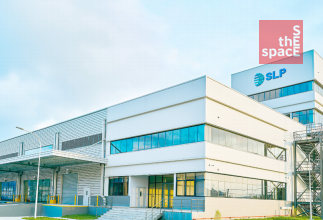
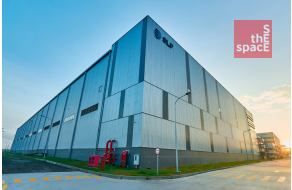
Leading logistics warehouse developers such as BW Industrial, SLP Park, and Mapletree are investing heavily in Long An, building Grade A warehouses to international standards: 10–12m high, epoxy flooring with a load capacity of 3–5 tons/m², ESFR automatic fire suppression systems, and multiple loading docks. Rental prices of 3.5–6 USD/m²/month – 30–40% lower than Ho Chi Minh City – offer a clear cost advantage attracting diverse tenants, from e-commerce startups to multinational FMCG corporations.
Long An is emerging as a strong alternative factory destination for businesses from Binh Duong and Ho Chi Minh City seeking more cost-effective solutions while maintaining a strategic location near the Ho Chi Minh City market. With factory rental prices 25-35% lower than Binh Duong, competitive labor costs, and abundant industrial park land, Long An is attracting a growing wave of investment from many countries and territories.
Tan Duc Industrial Park (Duc Hoa) is the largest and most developed industrial park in Long An, boasting integrated infrastructure and a high occupancy rate. Many textile, electronics, and food processing businesses from South Korea, Japan, and Taiwan are operating there. Hai Son Industrial Park (Duc Hoa) and Long Hau Industrial Park (Can Giuoc) offer more options in terms of location and rental prices. Long An Industrial Park (Ben Luc), situated along National Highway 1A, is a convenient logistics hub connecting to both Ho Chi Minh City and the Mekong Delta.
Ready-built factories in Long An are increasingly being upgraded in terms of technical standards thanks to the participation of professional developers such as BW Industrial, with factories meeting international standards: ceiling height of 8-10m, high load-bearing floors, stable 3-phase electricity, fire protection systems according to QCVN standards, and loading docks suitable for container trucks. This helps Long An compete directly with Binh Duong not only in price but also in infrastructure quality.
The industries suitable for Long An factories are diverse: textiles and footwear taking advantage of cheap labor; food and agricultural processing utilizing raw materials from the Mekong Delta; logistics and warehousing exploiting the strategic intermediate location; building materials manufacturing benefiting from inland waterway transport; and medium-scale electronics assembly shifting from Binh Duong.
Tay Ninh and Long An are both low-cost industrial investment destinations near Ho Chi Minh City, but each province has its own unique characteristics and strengths suitable for different types of businesses and industries. The following comparative analysis will help investors make the most appropriate decision for their business strategy.
Regarding location and connectivity: Long An has the advantage of better connectivity to Ho Chi Minh City (30–50km, numerous roads and waterways) and the Mekong Delta market. Tay Ninh is further from Ho Chi Minh City (70–90km) but has the unique advantage of the Moc Bai border gate bordering Cambodia and the mainland ASEAN market.
Regarding costs: Tay Ninh has lower factory and labor rental costs than Long An by about 10–20%, making it the most cost-effective option in the group. Long An is slightly more expensive but compensates with superior logistics connectivity and better market demand.
Regarding suitable industries: Tay Ninh is best suited for labor-intensive textiles and footwear, processing of noodles and agricultural products from local raw materials, border logistics with Cambodia and ASEAN, and the production of consumer goods for export through border gates. Long An is more suitable for e-commerce and FMCG logistics warehouses, manufacturing plants for distribution to the Ho Chi Minh City and Mekong Delta markets, processing of seafood and food from Mekong Delta raw materials, and businesses needing to combine both production and distribution.
Conclusion: Businesses prioritizing minimal costs and/or trade with Cambodia and ASEAN should choose Tay Ninh. Businesses prioritizing logistics connections between Ho Chi Minh City and the Mekong Delta and a wide consumer market should choose Long An. Many large corporations even combine both: production in Tay Ninh, warehousing and distribution in Long An.
Both Tay Ninh and Long An provinces implement many attractive investment incentives to attract domestic and foreign businesses, especially in the context of competition with other provinces in the Southern key economic region.
Corporate income tax (CIT) incentives in both provinces: businesses investing in industrial parks enjoy a preferential tax rate of 17% for 10 years (instead of the standard 20%), tax exemption for the first two years of profitability, and a 50% reduction for the following four years. Projects in particularly priority sectors or difficult areas receive higher incentives: 10% for 15 years, exemption for four years, and a 50% reduction for nine years.
Land lease fee incentives: land lease fees are exempted for 3 to 15 years depending on the sector and location. Projects investing in particularly difficult areas or in the highest priority sectors may be exempted from all land lease fees for the entire project lifecycle. The Moc Bai Border Economic Zone (Tay Ninh) has a particularly favorable incentive mechanism compared to regular industrial parks.
Investment and factory rental procedures in both provinces are undergoing significant reform: the one-stop mechanism at the Industrial Park Management Board helps businesses complete investment, environmental, and labor registration procedures in the shortest time. Many procedures are processed online through the electronic portal, reducing travel time and costs.
Labor training support: both Tay Ninh and Long An have programs to support businesses in human resource training, connecting them with local vocational training centers and providing initial training cost support for newly recruited workers.