RBF - WH in HCMC
See The Space Industrial - Where Ideas Take Shape
RBF - WH in HCMC


Frequently Asked Questions (FAQs)
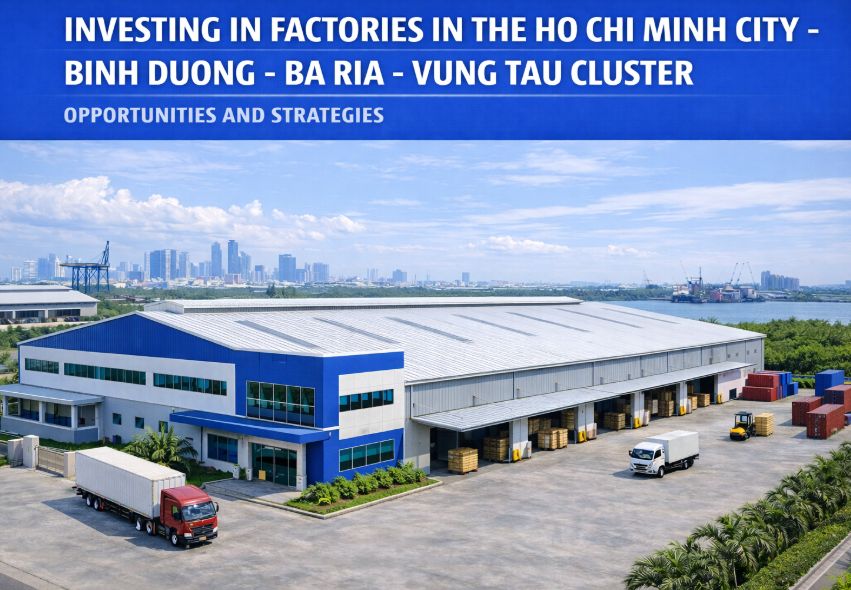
The three locations serve different strategic priorities. Ho Chi Minh City offers maximum proximity to Vietnam's largest consumer market (10+ million residents), financial institutions, and international partners, but factory space is the most expensive at USD 5–9 per m²/month and availability is increasingly limited. Binh Duong provides the best balance of infrastructure quality, labor supply, and cost efficiency at USD 3.5–7 per m²/month, with the most established industrial ecosystem and consistently top-ranked business environment. Ba Ria-Vung Tau delivers unmatched sea logistics advantages through Cai Mep-Thi Vai Port – one of Southeast Asia's largest deep-water ports – making it the optimal choice for export-oriented manufacturers shipping large volumes by sea, with factory rents at USD 3.5–6 per m²/month. Most businesses evaluate all three based on where their key cost drivers lie: market access, labor, logistics, or land cost.
A: Cai Mep-Thi Vai Port in Ba Ria-Vung Tau is one of the few ports in Southeast Asia capable of accommodating ultra-large container vessels (up to 200,000 DWT), enabling direct shipping to major global markets including the United States, Europe, and Northeast Asia without transshipment. For manufacturers based in nearby industrial zones such as Phu My and My Xuan, goods can reach the port within minutes, dramatically reducing inland transport time and cost. This direct shipping capability eliminates transshipment fees and the additional 3–5 days typically added when routing through intermediate ports. For high-volume exporters, this translates into significant annual savings on freight costs, faster delivery lead times, and improved supply chain reliability – all critical competitive advantages in export markets.
A: The Grade A warehouse market in Greater Ho Chi Minh City (encompassing HCMC, Binh Duong, Dong Nai, Long An, and Ba Ria-Vung Tau) is characterized by strong emand outpacing quality supply, particularly in strategically located logistics corridors. Occupancy rates for Grade A warehouses consistently exceed 90%, with the tightest availability near Cat Lai Port in Ho Chi Minh City and along the National Highway 51 corridor leading to Cai Mep Port. New supply from international developers like Mapletree, ESR, SLP Park, and Logos has increased significantly in recent years, but demand from e-commerce, FMCG, pharmaceuticals, and third-party logistics companies continues to absorb new inventory rapidly. Rental rates for Grade A warehouses range from USD 4–7 per m²/month depending on location, with annual escalation of approximately 3–5% built into most lease agreements.
A: Operating a factory in Binh Duong's industrial zones requires completing several regulatory steps. You will need an Investment Registration Certificate (IRC) issued by the Binh Duong Industrial Zone Authority (BIZA), which serves as your primary operating license. An Environmental Impact Assessment (EIA) or Environmental Protection Plan must be approved by the provincial Department of Natural Resources and Environment before commencing production. A Fire Prevention and Fighting Certificate must be obtained from the provincial Police Authority, with annual inspections required. For manufacturers in regulated sectors (food, pharmaceuticals, chemicals), additional sector-specific licenses are required. The good news is that Binh Duong's one-stop-shop mechanism at BIZA allows businesses to complete most of these procedures at a single location, and the province's consistently high PCI ranking reflects efficient, business-friendly administration that typically processes standard applications faster than national benchmarks.
A: Several industries are showing particularly strong growth momentum in this cluster. Electronics and high-tech manufacturing continues to expand as global brands diversify supply chains out of China, with Binh Duong and Ho Chi Minh City's high-tech park attracting semiconductor-adjacent, medical device, and precision engineering investments. Logistics and warehousing is growing rapidly, driven by Vietnam's booming e-commerce sector and increasing trade volumes through Cai Mep Port. Renewable energy equipment manufacturing is emerging in Ba Ria-Vung Tau as offshore wind projects accelerate. Pharmaceuticals and healthcare manufacturing is attracting increasing FDI seeking WHO-GMP certified production facilities. Food and beverage processing, particularly for export, continues steady growth. Meanwhile, traditional labor-intensive industries like garments and footwear are gradually relocating to lower-cost provinces, freeing up industrial land in the core cluster for higher-value activities.
Ho Chi Minh City is Vietnam's largest economic center and also has the highest density of industrial parks and export processing zones in the country. Despite the increasing scarcity of industrial land and high rental prices in Ho Chi Minh City, the demand for factory space remains consistently high thanks to its advantages of access to a huge consumer market, complete logistics infrastructure, and a diverse, high-quality workforce.
The system of industrial parks and export processing zones in Ho Chi Minh City includes prominent ones such as Tan Binh, Tan Thuan, Linh Trung I-II, Le Minh Xuan, Hiep Phuoc, Vinh Loc, and Tay Bac Cu Chi. Each zone has its own characteristics in terms of industry, location, and rental prices. Tan Thuan and Linh Trung export processing zones are known for attracting electronics and garment export businesses; Hiep Phuoc Industrial Park (Nha Be District) integrates a river port suitable for logistics and import/export; and Le Minh Xuan Industrial Park focuses on the chemical and construction materials industries.
Rental prices for ready-built factory space in Ho Chi Minh City range from 5–9 USD/m²/month depending on location and quality, the highest in the South, but this is offset by a central location and immediate access to the domestic market of 10 million people. For businesses needing proximity to customers, partners, and financial centers, factory space in Ho Chi Minh City remains an irreplaceable strategic choice.
Current trends show many businesses are shifting production to Binh Duong and Long An provinces while maintaining representative offices and showrooms in Ho Chi Minh City to sustain their commercial presence. The "suburban production – central business" model is becoming increasingly popular and effective for businesses seeking to optimize costs while maintaining brand recognition.
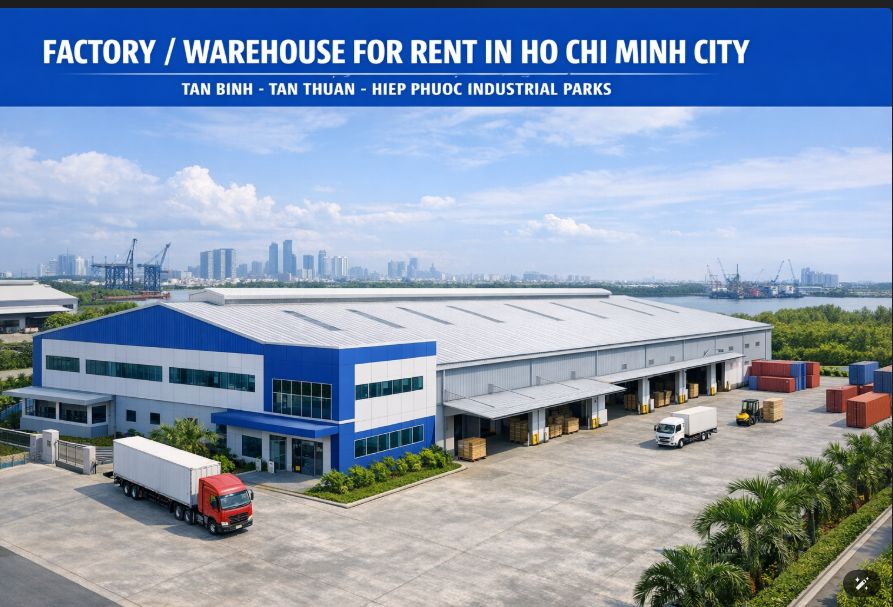
Binh Duong is Vietnam's most developed industrial province and the industrial hub of the Southern key economic region. With over 29 industrial parks and an average occupancy rate of over 90%, Binh Duong is home to more than 4,000 FDI enterprises from over 65 countries. Large corporations such as VSIP Group, Becamex, and Mapletree have established world-class industrial infrastructure here.
The list of prominent industrial parks offering factory space for rent in Binh Duong is diverse: VSIP I and II in Thuan An and Binh Duong are renowned for their Vietnam-Singapore standards, perfect infrastructure, and high-quality multinational business community; Song Than Industrial Park in Di An, close to Ho Chi Minh City, attracts Japanese and Korean businesses; My Phuoc 1-4 Industrial Park in Ben Cat offers large areas and more competitive prices; and Bau Bang Industrial Park in the north of the province is rapidly developing with well-planned layouts and ample land available.
Ready-built factories in Binh Duong are being offered by developers such as BW Industrial, Becamex, and VSIP with increasingly high standards: ceiling heights of 8–12m, stable 3-phase electricity, automatic fire protection systems, high-load concrete floors, and container-compatible loading docks. Rental prices range from 3.5–7 USD/m²/month depending on location and standards – lower than Ho Chi Minh City while maintaining comparable infrastructure.
Binh Duong consistently leads the national PCI (Provincial Competitiveness Index), reflecting a transparent business environment, streamlined administrative procedures, and a high level of service to businesses from the local government. This is a particularly important factor for FDI businesses when choosing a location for long-term investment.
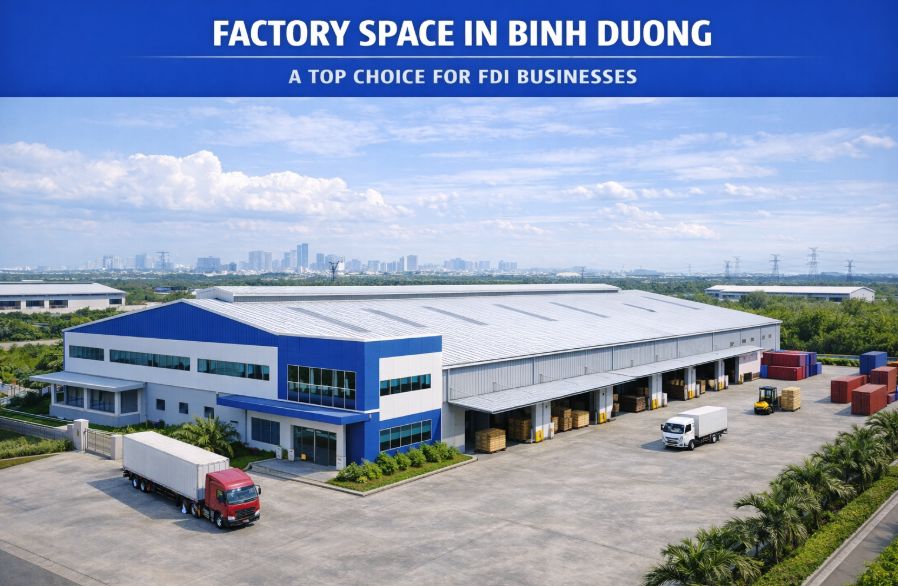
Factory for rent in Bà Rịa – Vũng Tàu in Phú Mỹ 1, 2, 3, Mỹ Xuân A, Châu Đức Industrial Zones. Close to Cái Mép – Thị Vải port, direct export, attractive incentives.
Ba Ria – Vung Tau possesses a unique maritime logistics advantage thanks to the Cai Mep – Thi Vai port system – one of the largest deep-water ports in Southeast Asia, capable of receiving super-large container ships with a tonnage of up to 200,000 DWT. This advantage allows manufacturing businesses here to export goods directly to the US, Europe, and Northeast Asia without transshipment, significantly saving costs and transportation time.
The industrial park system in Ba Ria – Vung Tau is mainly concentrated in the Phu My area (Phu My town) with Phu My Industrial Parks 1, 2, 3, My Xuan A, My Xuan A2, My Xuan B1, and many other specialized industrial parks. This area forms an integrated industrial-port center, where finished goods can be transported to the port within a few kilometers of internal roads. This "factory at the port" model is particularly suitable for businesses exporting large volumes of goods.
The thriving industries in Ba Ria – Vung Tau Industrial Park include: chemicals, plastics and rubber; heavy machinery and machine manufacturing; oil and gas industry and oil and gas services; electronics and components; logistics and port warehousing. In particular, the renewable energy sector (offshore wind power) is creating a new wave of investment in the province, driving up demand for factories and assembly plants for energy equipment.
Factory rental prices in Ba Ria – Vung Tau range from 3.5–6 USD/m²/month, more reasonable than Ho Chi Minh City and Binh Duong, while offering superior port logistics advantages. This is an optimal choice for import-export businesses needing to minimize international shipping costs and time.
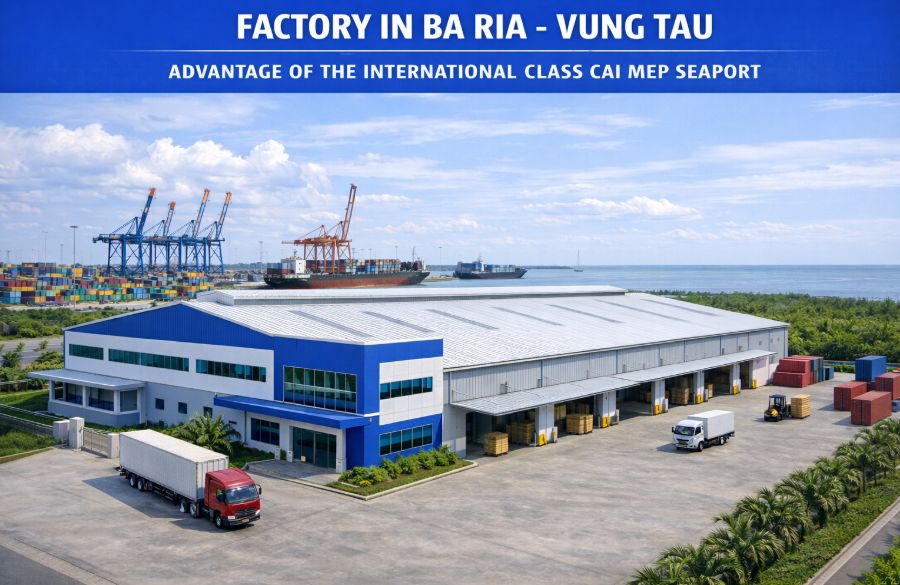
Ho Chi Minh City and the surrounding areas of Binh Duong and Ba Ria – Vung Tau form the largest logistics hub in Vietnam, boasting the most comprehensive system of warehouses, distribution centers, and logistics services nationwide. With a consumer market of over 20 million people within a 100km radius and two major seaports, Cat Lai and Cai Mep, this region is an essential destination for any business requiring strategic warehousing and logistics solutions.
The warehouse rental market in the Ho Chi Minh City – Binh Duong – Ba Ria – Vung Tau region is experiencing a boom in both supply and demand. Leading international logistics warehouse developers such as Mapletree, ESR, Logos, and SLP Park are operating and expanding their portfolio of Grade A warehouses meeting international standards in the area. New warehouse projects typically meet the following standards: ceiling heights of 10–14m, epoxy flooring with a load capacity of 3–5 tons/m², ESFR sprinkler systems, multiple loading dock doors with hydraulic levelers, and integrated warehouse management systems (WMS).
Demand for warehouse space comes from various business groups: e-commerce platforms and online retailers needing fulfillment warehouses near Ho Chi Minh City; FMCG and consumer goods distribution companies needing distribution center warehouses; pharmaceutical and specialized food businesses requiring temperature-controlled warehouses; and import/export companies needing bonded warehouses or port-based warehouses near Cat Lai and Cai Mep.
Grade A warehouse rental prices in Ho Chi Minh City range from 5–7 USD/m²/month; Binh Duong 4–6 USD; and Ba Ria-Vung Tau near ports 3.5–5.5 USD. Cold storage and temperature-controlled warehouses cost more, from 8–15 USD depending on requirements. The trend of relocating to Binh Duong and Long An is growing stronger as businesses seek lower costs while still ensuring good logistics connectivity with Ho Chi Minh City.
The Ho Chi Minh City – Binh Duong – Ba Ria Vung Tau industrial cluster is the most dynamic industrial economic triangle in Vietnam and one of the most attractive in Southeast Asia. Each locality in this triangle plays a distinct and complementary role: Ho Chi Minh City is the center of commerce, finance, and consumption; Binh Duong is the hub of multi-sector industrial production; and Ba Ria – Vung Tau is the gateway for international maritime exports. This combination creates a complete, self-contained, and particularly efficient industrial ecosystem.
The strategy for selecting factory locations within this cluster depends on the priorities of each enterprise. If the priority is proximity to the domestic market and partners: choose Ho Chi Minh City or Binh Duong, specifically the Thuan An – Di An area. If the priority is optimal cost and large area: choose Binh Duong, specifically the Bau Bang – Phu Giao area or Ba Ria – Vung Tau. If the priority is maritime export logistics: choose Ba Ria – Vung Tau, specifically the Phu My – My Xuan area near Cai Mep port. If a balance of all three factors is needed, central Binh Duong (VSIP, Song Than) is often the best balancing point.
Investment trends in factory space in the region are shifting in two main directions: moving towards high-tech industries (R&D, semiconductors, medical equipment) in high-tech industrial parks in Ho Chi Minh City and Binh Duong; and expanding geographically to neighboring provinces (Long An, Tay Ninh, Binh Phuoc) as land in core industrial parks becomes scarce. In both trends, the central coordinating role of the Ho Chi Minh City – Binh Duong – Ba Ria-Vung Tau cluster remains unchanged.
Investors should note that factory rental prices in the region are increasing by an average of 5–8% per year, reflecting demand exceeding supply in the high-quality segment. Booking and signing lease contracts early, especially in key industrial parks, will give businesses a price and location advantage.